Monday, 28 March 2016

(58) The eagle dares: Independent goes out of print on a scoop

Link: http://www.theguardian.com/media/2016/mar/26/eagle-dares-independent-newspaper-final-print-edition-scoop

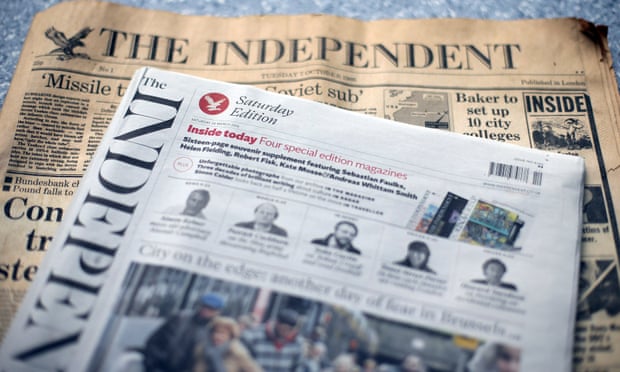
The first and last editions of the Independent newspaper, which began in 1986.
 
Summary:
 
The final print edition of the Independent was greeted with a fond farewell from journalists around the world as it hit the stands on Saturday, its last day before the title moves to a digital-only format. The paper ends with an exclusive story about a British connection in a plot to kill a Saudi king, and a striking image of train passengers being evacuated during an anti-terrorism operation in Brussels, on its final front page. A special wraparound says simply “STOP PRESS”. Referring to the demise of the paper in print as a “bold transition” in its final editorial, which it says “history will judge as an example for other newspapers around the world to follow”.
 
Key data/statistical information:
 
  • The paper was launched by a group of journalists led by Andreas Whittam Smith in 1986
  • It enjoyed initial success rising to a circulation passing 400,000 by 1988, and a Sunday title was launched in 1990 with Stephen Glover as editor
  • The company said it would create 25 new jobs at the online-only Independent, and a further 34 editorial roles would transfer to Johnston Press as part of the regional publisher’s acquisition of the i
  • The paper had seen “some of the best journalistic writing in Britain in the 20th century”
 
What's my view?
 
I think the Independent made a wise decision as we are now living in the era of new and digital media. Therefore by focusing on keeping their on-line website in place, they will increase their popularity as people prefer to receive news on-line rather than reading it or watching it on TV.


(57) Fake Brussels YouTube videos prove ease of digital disinformation

Link: http://www.theguardian.com/media/2016/mar/23/fake-youtube-videos-brussels-attacks-facebook-twitter

A YouTube video that was claimed to be CCTV footage from the Brussels attacks.
 
Summary:
 
Within a couple of hours of news breaking of Tuesday’s attacks in Brussels, video emerged on YouTube that was claimed to be from CCTV showing an explosion at the city’s Zaventem airport. The footage rapidly spread across social media, and was reported by at least one major national news site. It was followed by further footage supposedly showing an explosion at the Maelbeek metro station near the European Parliament, and another video claiming to be from the airport. However, none of the footage was what it was claimed to be. They were all recordings from 2011, two from an attack on Moscow’s Domodedovo airport, one from a bombing of a metro station in Minsk, the capital of Belarus. The grainy CCTV clips were turned from colour to black and white, flipped horizontally, relabelled and posted as if they had emerged fresh from the day’s events. The misleading videos are examples of a phenomenon that is becoming increasingly common during almost every major news story featuring violent, fast-moving events. False or misleading reports spread rapidly across social media and are picked up by reputable news organisations, further obscuring an already incredibly confusing picture.
 
Key data/statistical information:
 
  • During the Paris attacks last November pictures circulated claiming to be from the scene which were in fact from the Charlie Hebdo shootings the previous January. Images from 2 days earlier at a show in Dublin by the Eagles of Death Metal, who were playing when militants attacked the Bataclan Theatre where 89 people were killed, were shared claiming to be from that night’s gig.
  • Alastair Reid, managing editor of 1st Draft, a coalition of organisations specialising in verifying information on social media that is backed by Google, said part of the problem is that anyone publishing on platforms such as Facebook has the ability to reach as large an audience as a news organisation.
 
What's my view?
 
One of the downsides of the increase in new and digital media and the internet revolution is that some information on-line will be inaccurate besides unreliable. People are trying to find different ways to troll or to reach a large audience which is possible through social media.
 

(56) Sun ordered to admit British Muslims story was 'significantly misleading'

Link: http://www.theguardian.com/media/2016/mar/26/ipso-sun-print-statement-british-muslims-headline

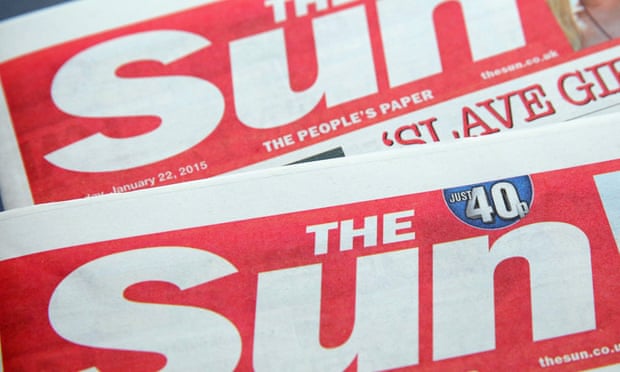
The Sun masthead

Summary:

The Sun has been ordered to print a statement acknowledging that its claims that one in five British Muslims supported people who have gone to Syria to fight for jihadi groups such as Islamic State were significantly misleading. The Independent Press Standards Organisation (Ipso) said a front page article from 23 November last year – as well as more coverage inside the paper – misrepresented the results of the poll on which they were based because the relevant question in its poll did not support the claim. But, while Ipso upheld the complaint it investigated, the paper was spared having to print notice of the adjudication on its front page. The watchdog said the newspaper had agreed to publish the notice on page two of Saturday’s edition, having been ordered to place it no further back than page five.

Key data/statistical information:


What's my view?

Its good that the Sun was forced to print a statement acknowledging that what they said was misleading and perhaps inaccurate. On twitter, many hashtags were trending that were taking the mick out of what the Sun about "1 in 5 Brit Muslims'...". The force that social media have nowadays could have potentially made it essentiel for the Sun to print the statement as the hashtags achieved its purpose on making people aware of what the Sun had done.

(55) Netflix races ahead of Amazon and Sky with 5m UK households

Link: http://www.theguardian.com/media/2016/mar/22/netflix-amazon-sky-uk-subscribers-streaming

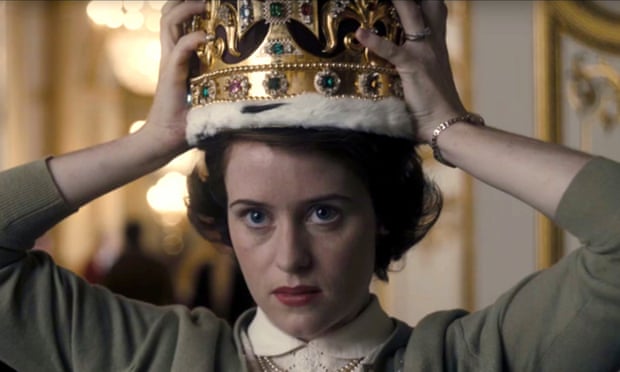
Claire Foy in The Crown.


Summary:
 
Nearly a quarter of UK households subscribe to Netflix, with 1.4 million joining the streaming service in 2015 alone to watch popular series such as House of Cards, a report has said. Netflix is far ahead of competitors such as Amazon’s Prime Instant Video or Sky’s Now TV, and is continuing to grow faster than the other services. Now TV is seen as a response by Sky to growing interest in cheaper internet-based video options, but the broadcaster says it is primarily aimed at consumers who would not sign up for a Sky subscription.

Key data/statistical information:

  • More than 5 million households, or 24% of the total, subscribed to Netflix at the end of 2015, compared with 14% in 2014
  • According to the data, there are about 1.6 million households subscribing to Amazon’s service in the UK, up about 300,000 over 2015, and fewer than 1 million signed up to Sky’s Now TV.
  • more than 6.5 million households are signed up to some sort of video-streaming service
  • while 82% of Netflix households only subscribed to one streaming service, about half of both Amazon and Now TV subscribers were also signed up to another provider
  • the figures also show that almost a fifth of households that do not have a TV do subscribe to a video-streaming service

What's my view?

It is clear that there is a competition between Netflix, Amazon and Sky. These streaming services are all searching to provide a better experience for their audience so as to become more popular. This is due to the rise and new and digital media as people are now more interested in watching their favourite shows on streaming services rather than normal TV.


Monday, 21 March 2016

Independent NDM case study: Up-to-the-minute web research

The telegraph- Music streaming just became a billion-dollar industry 

http://www.telegraph.co.uk/finance/newsbysector/mediatechnologyandtelecoms/digital-media/11881158/Music-streaming-just-became-a-billion-dollar-industry.html

Revenues from streaming music online have surpassed $1bn for the first time. Digital downloads of songs continued to fall out of favour in the first half of the year, while free and paid music-streaming revenue kept growing, even without much of a bump from the launch of Apple Music. Streaming revenue as a whole surpassed $1bn in the first half of the year for the first time. While streaming music revenues continued to grow healthily, the rates being paid to labels and artists for streaming music do not always equal fair market rates. But the level is far below the industry peak in 1999 of $14.6bn, when compact discs were dominant.
  • Overall music industry revenue fell a half percentage point to $3.2bn
  • Revenue from paid subscriptions to services like Spotify and Rhapsody grew 25pc to $478m, while revenue from free services like Pandora grew 22pc to $550m
  • Download sales revenue fell 4pc to $1.3bn, while physical disc sales dropped 17pc to $748m
  • The rise of digital streaming has helped the industry maintain annual revenues of around $7bn since 2010, offsetting the decline in revenue from digital downloads of single tracks that began in 2013


The Guardian- Imogen Heap: saviour of the music industry?

http://www.theguardian.com/music/2015/sep/06/imogen-heap-saviour-of-music-industry

When was the last time you bought a CD or a record? Chances are, you’re listening to more music than ever, but buying less of it. In 2012, for the first time, digital sales of songs – such as iTunes – surpassed physical sales. More likely still is that you were on YouTube or Spotify, which host hundreds of thousands of songs, played billions of times. It’s a golden age for music.
Music is in many ways a bellwether for the digital revolution. The products of many creative industries – art, music, books, papers, films – which were once solely physical objects, shipped, bought and carried home, are now digital files available on demand at next to no cost. Because digital files can be reproduced and shared infinitely and easily, the result in almost every industry has been more consumption and lower average returns, fuelling fears about how the people who make this stuff – the writers, artists and musicians – will get paid for it.
The modern music industry was created at a time when it made economic sense to produce a million copies of one vinyl record, and copyright could be successfully enforced. But as the industry went digital, the whole way music was made and sold changed. In the early 00s, many feared the music industry would soon wither away as free streaming services and pirated content made music, de facto, free.

  • Spotify has paid $300m (£196m) in royalties in the first three months of 2015. YouTube has paid out more than $1bn (£654m) since Content ID started seven years ago.
  • David Byrne, of Talking Heads, estimates that only 15-20% of Spotify’s payments make it through to the artists.


The Guardian- Free streaming is 'killing music industry': Ministry boss

http://www.theguardian.com/technology/2015/mar/11/ministry-of-sound-streaming-switch-off-free

The reality of some of the bigger streaming services is that 75% of their user base are free, which has a horrific impact on the music industry and its ability to invest in talent going forward.” Presencer also attacked streaming services for being beholden to their investors rather than musicians and rights holders. Unrest over free streaming was at the heart of Spotify’s dispute with Taylor Swift in 2014, when she pulled her music off the service in protest at the company’s refusal to allow her to make it available only to paying subscribers. The reality is that on-demand music is a consumption medium, and giving it away for free just kills the industry.


The Guardian- Why the music industry is fighting the wrong copyright battle

http://www.theguardian.com/technology/2015/jun/19/why-music-industry-fighting-wrong-copyright-battle

It took until 2014 for the UK to have a private copying exception, legalising what everyone assumed to be possible: making copies of content you have legally bought for purposes such as backups, cloud storage and format-shifting. To fairly compensate rights holders for the dubious “harm”, other European countries have extracted a private copying levy for things like blank CDs, MP3s, printers and smartphones. The amounts vary from a few cents to several euros. It is clearly unsatisfactory that our freedoms over the use, sharing and transfer of digital media should be narrower than with physical media. By chasing levies on legal content, the real issues about copyright in the digital age are being overlooked.

The Guardian- Daniel Ek: Spotify and free music will save the industry, not kill it

http://www.theguardian.com/technology/2015/jun/07/daniel-ek-spotify-free-music-save-industry-not-kill-it

The chief executive of Spotify, Daniel Ek, has predicted that the free online music service will help the industry grow to as much as 10 times its current size, in a future where old distinctions between providers break down. Spotify will have to win over its doubters first, including convincing them that it can turn more of its 45 million free users into paying subscribers – it has 15 million of the latter – and thus increase the money earned by artists and songwriters, via its payouts to the labels and publishers that represent them. Some artists, most famously Taylor Swift, have been criticising Spotify’s “freemium” approach, which allows people to listen for free to its basic, advertising-supported service.The boss of the world’s largest music label, Universal Music, called free streaming “not something that is particularly sustainable in the long term”. With industry rumours of Apple egging major labels on to restrict Spotify’s free service, Spotify is feeling the heat.“The entire recorded music industry has somewhere between $14bn and $15bn in trade-sales value. Now look at the radio industry, which in the US alone is around $16bn in revenue and globally is about $80bn – four times the size of the music industry,” said Ek. “If we’re able to transition the traditional radio behaviour online, you’re looking at a music industry that’s much larger than it’s ever been. If you do that, and also add subscription to the mix, especially at Spotify’s conversion rate, you’d be looking at a music industry that would be $100bn to $160bn in size. That’s the key argument that I think gets lost here.” The downside to this is resources: Spotify reported revenues of €1bn in 2014, compared with Apple’s $199.7bn and Google’s $66bn. The costs of running a streaming music service – Spotify reported a loss of €165m in 2014 – are a drop in the ocean for hardware and search-engine businesses.

The Guardian- No such thing as bad PR: Is social media saving or damaging the music industry?

http://www.theguardian.com/music/2016/feb/19/social-media-damaging-music-industry-pr-twitter-kanye-west

The impact of social media has had a profound effect on how the job is done; the way a news story is spread or a song is shared is now defined by social media, with the tradition of securing editorial coverage no longer being the end of the process but the beginning. Now that many of the industry’s biggest stars decline interviews their creative output and their social media accounts are the only ways in which fans can learn about an artist’s every move, every new tattoo. Cultivating an audience on social media does, of course, have its benefits. Artists can hotwire ideas and newly recorded material to fans who give real-time feedback, and others can gradually expose a curated version of themselves that quashes any tabloid rumours.

The Guardian- Taylor Swift takes a stand over Spotify music royalties

http://www.theguardian.com/music/2014/nov/04/taylor-swift-spotify-streaming-album-sales-snub

Yet this week was also marked by Swift’s decision to remove her entire back catalogue from music streaming site Spotify, arguably the biggest growing source of music consumption in the world. It boasts more than 10 million paying subscribers, across 58 countries, on top of the 30 million who access the streaming service for free. The move has been condemned by some as shortsighted and applauded by others as a savvy way to drive up her album sales. The singer was one of Spotify’s most popular artists, with 25% of listeners having streamed her songs. Her songs were on 19m playlists and the lead single from 1989, Shake It Off, went straight to number one on Spotify. But the singer’s relationship with the site has always been rocky – Swift initially refused to release her 2012 album Red on Spotify, critising the fact that artists receive between just $0.006 and $0.0084 per song play. Swift is not the first artist to withdraw music from spotify. Radiohead’s Thom Yorke called for a boycott of the service over unfair payment practices, removing all his solo projects from the site and describing it as “the last desperate fart of a dying corpse”. The Beatles, AC/DC and The Black Keys are also not available to stream on Spotify. Taylor has probably sold over 1.3m copies of her album in the first week and nobody has done that since Eminem in 2002. She is one of the few artists today who can really drive sales and not just streams, so I don’t think this is a move that will hurt her at all. I think you could count on one hand the number of artists that could pull this off and remain popular – as digital download sales are in freefall. I do think eventually every artist is going to have to be on a streaming service … Over time, if artists want their music to be heard in any meaningful way, they need to be on a streaming service.Spotify is growing in importance for all artists as it represents a cultural change in the way people consume music. We don’t see it as a negative platform – obviously like anyone we’d prefer to see the monetisation of streaming be higher.

The Guardian- Taylor Swift criticises 'shocking, disappointing' Apple Music

http://www.theguardian.com/technology/2015/jun/21/taylor-swift-criticises-shocking-disappointing-apple-music

Swift has joined independent labels in attacking Apple’s plans not to pay royalties during the three-month free trial of its new Apple Music streaming service.

 “I’m sure you are aware that Apple Music will be offering a free 3 month trial to anyone who signs up for the service. I’m not sure you know that Apple Music will not be paying writers, producers, or artists for those three months. I find it to be shocking, disappointing, and completely unlike this historically progressive and generous company.”

Swift praised Apple for moving the music industry towards a “goal of paid streaming” and urged the company to change its Apple Music policy before the service launches on 30 June.

The Guardian- Tidal: 10 things you need to know

http://www.theguardian.com/music/2015/apr/05/tidal-10-things-you-need-to-know-jay-z-madonna-music-streaming

Tidal is a music streaming service that originally started in Scandinavia in 2009. It was called WiMP then, launched by technology firm Aspiro and retailer Platekompaniet – Norway’s equivalent of HMV. In October 2014 Aspiro rebranded WiMP as Tidal for its UK and US launch, with its main selling-point being its “lossless” (higher-quality) streams. It also added music videos and deeper editorial, albeit for double the price – £19.99 a month – of rivals such as
Spotify, although it has now launched a non-lossless £9.99 version too. Aspiro had 500,000 paying subscribers at the end of 2014, and was bought for $56m last month by a company controlled by Jay Z.
Tidal is under new ownership, and those owners are musicians. Not just Jay Z, but Arcade Fire, Beyoncé, Calvin Harris, Coldplay, Daft Punk, Deadmau5, Jack White, Jason Aldean, J Cole, Kanye West, Madonna, Nicki Minaj, Rihanna and Usher.
The big message from Tidal’s launch was its new owners’ determination to restore the value of music in the eyes (or ears) of listeners, which means making them pay for it, rather than listening for free, as they can on the advertising-supported tiers of rivals Spotify and Deezer. “People are not respecting the music, and [are] devaluing it and devaluing what it really means. People really feel like music is free, but will pay $6 for water,” said Jay Z in an interview with trade magazine Billboard.
Tidal is claiming it will pay more, but that may not be as easy as it hopes. One of Tidal’s key tactics for standing out from the streaming crowd will be exclusives: the promise that you will be able to hear some music on Tidal before it is available anywhere else. This is a game being played by Spotify too, though, as well as Apple, which is preparing to relaunch its US-only Beats Music streaming service globally later this year.
YouTube is the world’s most popular music streaming service, with a large chunk of its 1 billion monthly viewers watching music videos – especially younger users. It is trying to get people to pay for music too: it’s launching its own Spotify rival, YouTube Music Key, with a similar model of a free, ad-supported tier then a £9.99 monthly subscription with more features. But YouTube is already a free way to listen to almost any song ever recorded. Some in the music industry fear that if Spotify’s free tier is restricted or even shut down, listeners will drift away to YouTube – which pays much less per stream – rather than subscription services.
Google v Apple v Spotify v Tidal v Deezer… but there’s another trend worth watching, which is the growth of fan-funding and direct sales sites, such as Bandcamp and Patreon, for independent musicians. Bandcamp helps artists sell their own music and pays out $3.5m a month to its network of musicians. With Patreon, fans commit to paying a small amount whenever an artist releases something new: it pays out $2m a month. If Tidal represents big artists seeking more control of digital music, these sites fulfil a similar role for independent musicians. Better partnerships with them may even be the way for Tidal, Spotify and other streaming services to show themselves as truly artist-friendly.

The Guardian- Jay Z’s music-streaming service Tidal struggles despite celebrity fanfare

http://www.theguardian.com/technology/2015/apr/22/music-streaming-service-tidal-struggles-despite-celebrity-fanfare

 The app has dropped out of the iPhone top 700 downloads chart. Talking about his vision for the service , the Jay-Z said he and his roster of celebrity supporters wanted Tidal to be the first artist-owned music streaming platform that would pay 75% of its revenues back to the music industry (compared with the 50% paid by Spotify and Pandora). To begin with, Tidal comes with a higher price tag than its rivals, costing $20 a month, and does not have the free, ad-supported option offered by services such as Spotify. For this higher subscription fee, Tidal users have access to 25m tracks, about the same number as Spotify, but it also offers a lossless high-fidelity sound quality that its competitors don’t have, as well as HD music videos and music playlists curated by musicians such as Jay Z and Beyoncé. The main issue, he added, was that not even Jay Z’s name and hip-hop credentials were enough to make people pay more money to stream music.Lily Allen has also expressed concerns that the high price of Tidal will only encourage people to pirate more music. Writing on Twitter, the singer said: “Tidal is so expensive compared to other perfectly good streaming services. He’s taking the biggest artists, made them exclusive to Tidal … People are going to swarm back to pirate sites in droves. Up and coming (not yet millionaires) artists are going to suffer as a result.”

The Guardian- Adele's new album 25 will not be streamed on Spotify

http://www.theguardian.com/music/2015/nov/19/adele-new-album-25-not-stream-spotify-apple-music

Adele, who is poised to have the bestselling album of the year when her third record, 25, is released worldwide on Friday, will not make it available on streaming services such as Spotify and Apple Music. Hello, the lead single off of 25, debuted at No 1 on the Billboard Hot 100. Over the course of a week, the song was downloaded 1.1m times.

BGR- SNL sketch roasts Tidal as Ariana Grande impersonates Rihanna, Britney Spears and more

http://bgr.com/2016/03/14/ariana-grande-saturday-night-live-tidal/

To be honest, I was a little bit surprised that Tidal – the music streaming service backed by Jay-Z – would even be considered popular enough to warrant being mocked by Saturday Night Live. But who knows, perhaps Kanye West’s recent Twitter tirades and sporadic references to his new album being exclusively available on Tidal gave the service a temporary publicity boost. Whatever the reason, Ariana Grande over the weekend, along with the rest of the SNL cast, mocked Tidal in a sketch. As for how Tidal continues to perform as a business, the service did see a discernible uptick in popularity when Kanye West’s The Life of Pablo album was released, but the company still managed to mismanage the album launch amid reports that many users who paid for the album were unable to access it. Not only that, but some users even reported that they were being charged multiple times.

The Guardian- Will Tidal be the next music streaming service to drown?

http://www.theguardian.com/music/2016/mar/03/tidal-next-music-streaming-service-drown

Another music streaming service that has been generating the most negative headlines over the past year: Tidal. The star power of its co-owners – Jay-Z, Beyoncé, Madonna and more – hasn’t spared it from criticism and derision. Yet this is a streaming service that managed to bag those exclusives on the two hottest albums of 2016 so far. It also claims to have grown from 500,000 paying customers in March 2015, to one million by October, and now reportedly 2.5 million in February 2016 after a Kanye-fuelled surge – even if it is unclear how many of those new subscribers are on a free trial.

Monday, 14 March 2016

(54) Mashable launches French-language site with France 24

Link: http://www.theguardian.com/media/2016/mar/08/mashable-avec-france-24-google-digital-news-initiative

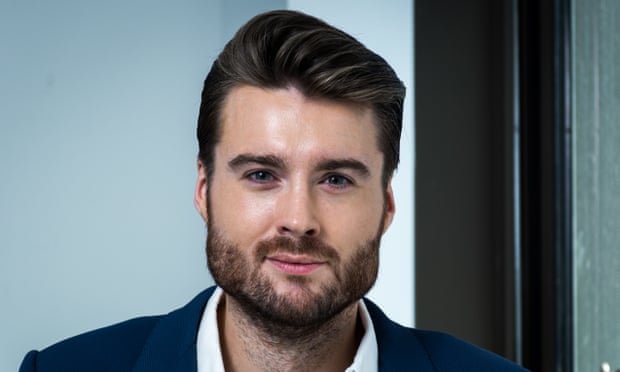
Peter Cashmore, CEO of Mashable.
 
 
Summary:
 
Mashable has struck a deal with France 24, the international news and current affairs public service broadcaster, to launch a French-language version of the social media news site.
The new website, which will be called Mashable avec France 24, will be equally financially backed by the two companies as well as receiving support from Google’s innovation fund set up as part of its Digital News Initiative to support publishers. The site aims to combine Mashable’s content with the broadcaster’s in-depth local coverage, existing digital audience and video distribution capability. “Launching in France is a big moment for Mashable as we continue to expand globally and form strategic partnerships that can accelerate our growth in new markets,” said Adam Ostrow, chief strategy officer at Mashable. “France 24’s long track record of excellence in both video and news makes them the perfect partner.”
 
Key data/statistical information:
 
  • France 24 broadcasts three channels globally – French, Arabic and English – with a weekly audience of 50 million viewers across 180 countries
  • The deal marks Mashable’s 3rd partnership with an international media company to enter a new market
  • In 2014, Mashable opened an office in the UK, its largest market by audience outside the US, its 1st international office
 
What's my view?
 
It is clear that the news industry need some help in order to keep the business running as new and digital media has made receiving news through social media more appealing. The fact that France 24 will be partnering up with Mashable, a social media news site, it will help the business to keep striving in a generation where people are no longer interested in getting news through newspapers or TV. Also, since France 24 is a french news broadcaster, this will help Mashable to be globalised as people from France will start to know more about the site. This shows globalisation and how, in a long term, it will bring benefits two both sides of this partnership.


(53) BBC and ITV in talks to launch a Netflix-style streaming service

Link: http://www.theguardian.com/media/2016/mar/10/bbc-and-itv-in-talks-to-launch-a-netflix-style-streaming-service

Shows, such as Top Gear, could be shown on a new BBC/ITV streaming service
 
 
Summary:
 
The BBC is understood to have held talks with rivals including ITV about launching a Netflix-style video streaming service. The service is likely to mostly focus on providing older, archive TV content, not the first-run of shows, although it is understood there would be a certain amount of original commissions. Older content can be accessed on a variety of services including pay-TV service UKTV, in digital format through the recently launched online BBC Store, DVDs, as well as Netflix, which has shows such as Top Gear. The corporation and ITV, which also has a 30-day digital TV service and huge scope to exploit an extensive programme archive, have noted the success of services such as Netflix in extending the commercial life of such programming content. Adam Crozier, the ITV chief executive, has targeted digital content exploitation as a key growth driver to continue to reduce the broadcaster’s historical reliance on traditional TV advertising revenue.

Key data/statistical information:

  • While Britons pay £145.50 per year for free access to BBC content, including on the BBC iPlayer, content moves off the service after 30 days.
  • Netflix has more than 75 million subscribers globally. Since launching in the UK in 2012, it has attracted more than 5 million users paying £5.99 a month.
  • If the service does get off the ground, it could open up a crucial way of further monetising BBC content, an important strategy as the corporation looks to find £800m in annual savings.
  • The broadcaster has invested heavily in building its production arm, ITV Studios, which saw revenues grow a third to £1.2bn and profits up 27% to £206m.

What's my view?

It seems that TV broadcasters are now trying to adapt to the changes that new and digital media has caused. Since people are now more inclined to watch their favourite shows on-line or on streaming services such as Netflix, BBC and ITV seem to be adapting to their audiences likings so as to keep up-to-date on what the people want. By doing this, they are keeping their platform relevant to this new and upcoming era but also help maintain the business. From a pluralist viewpoint, it can be said that this shows that the audience has the power to make changes to the way things work in society. New and digital media has provided the audience with the power and is slowly decreasing the amount of power that the elite people use to have years ago.