Monday, 9 May 2016

(70) BBC follows Netflix in using online viewing data to help it pick new shows

Link: http://www.theguardian.com/media/2016/may/07/bbc-netflix-data-twitter-facebook-bbc-id

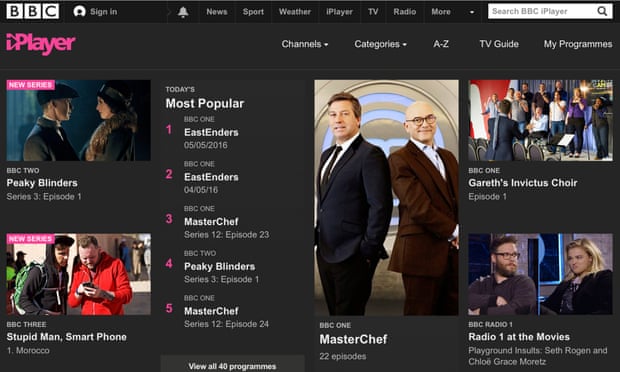
More than 6 million people have signed up for a BBC iD, which lets them personalise the iPlayer and other services.
 
Summary:
 
The BBC is following Netflix in using online viewing data to help it decide which programmes to make. It is also experimenting with using social media such as Twitter and Facebook to help it make commissioning decisions. The experiments are part of the corporation’s myBBC project announced by director general Tony Hall last year to “reinvent public service broadcasting through data”.

Key data/statistical information:

  • The project has also gathered data from the 6 million-plus people who have signed up for a BBC iD that lets them access personalised services online
  • The BBC are capturing 800m events a day
  • Though many of the six million people who have signed up for a BBC ID do not appear to be using it regularly, more than a third up are using it at least once a month, and 10% are doing so ever day
  • People who are signed in consume 44% more hours of content
  • More than one million people have also signed up for a daily newsletter which recommends BBC content people might enjoy, up from 200,000 a year ago

What's my view?

As competition rises, so does the BBC iplayer in accord to staying as popular as Netflix and Amazon Prime. New and digital media has created TV streaming which seems to be very popular. The fact that the BBC are considering using social media to increase their popularity, could mean that BBC iplayer could become a great streaming service competitor in the near future.

(69) Vice UK rejects call for union recognition

Link: http://www.theguardian.com/media/2016/apr/27/vice-uk-union-recognition-nuj

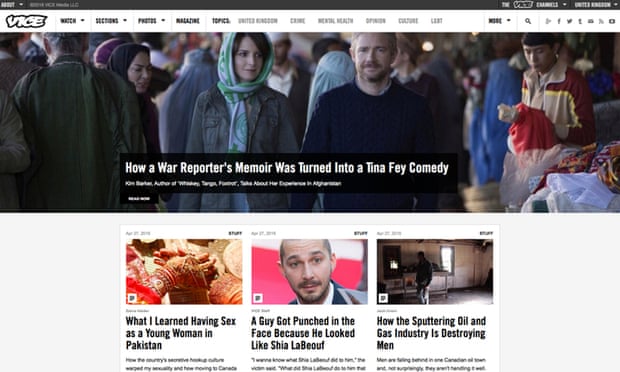
Vice UK has turned down an NUJ request for recognition.
 
Summary:
 
Vice’s UK arm has rejected a push for union recognition by a group of staff, bucking a growing trend that has seen unionisation at digital media businesses including the outlet’s main base in the US. Media group claims NUJ is ‘not used to innovative, digital workplaces’ and offers to set up staff council instead. At a meeting held in London on Tuesday, Vice UK staff were told that the National Union of Journalists would not be recognised at this point but instead were offered the chance to set up an internal staff council.
 
Key data/statistical information:


What's my view?
 
Vice is known for using user generated content and uncensored news stories on their websites or on snapchat. Due to the lack of censorship that the company has, Vice UK refuses a union recognition in order to get pulled into censorship and gatekeepers.

Friday, 6 May 2016

Secion B Exam Question

New and digital media have contributed to the process of globalisation, the idea that the world is becoming increasingly interconnected through global culture. Using your own case study, evaluate the impact of new and digital media have had on globalisation (48)


It has become clear that globalisation has become something great as the world is increasingly becoming interconnected through global culture. New and digital media has given globalisation the possibility to connect audiences from all around the world.

Consider social media as an example. Social media has allowed people to connect with each other as well as communicate with each other despite living on the other side of the world. Social networking sites such as Facebook, Twitter and Instagram has become increasingly popular because people are connected on to one site where they can talk and post pictures for all to see. The comment section on social media and websites allow the audience to discuss points and topics which then turn into debates. Also, Twitter has become very powerful over the last few years because this is the way in which the audience have the power to bring awareness to topics that they view as important. For instance, the Kesha incident that happened recently. Kesha was being abused by her music producer and people started using the hashtag #kesha to bring the problem to the attention of others. When a topic becomes trending, people around the world will be aware of the situation. This is how people now find out about things. "The internet is an empowering tool" (Al Gore) in which it allows the audience to connect and discuss things with each other on-line.

Another way new and digital media has contributed to the process of globalisation is by globalising the news. Globalisation revolves around the global news system that has developed as a result of technological advances. New and digital media has made it possible for all media to be accessed via a single device therefore creating new forms of interaction across and among media. We receive news from one device, such as our mobile phones, from looking at news sites or Twitter and we all see the most famous news. However, due to familiarity (Galtung & Rouge) we only see the news that affects us or America. The news is influenced by American culture imperialism. National broadcasters are capable of and responsible for selecting and repackaging information to best suit their conceptions of domestic needs. The US monopolises the global information system, dominating nations that wield less power in it. Despite that, we can see the globalisation in news through the example of when Mashable struck a deal with France 24, the international news & current affairs public service broadcaster, to launch a french-language version of the social media site. A Guardian article explains how France 24 broadcasts 3 channels globally-French, Arabic and English- with a weekly audience of 50 million viewers across 180 countries. This shows that Mashable will be globalised through the aid of France 24.

Citizen journalism has also become popular and has become a big thing in globalisation. We can view events live as they happen and many people around the world share the same moment. New and digital media has brought about apps such as Pariscope and Snapchat. We are now living in what can be described as a "global village" (McLuhan) as we view each others videos that are posted on Snapchat. This is a key way in which fans stay communicated with their favourite celebrities. Kylie Jenner is known for being a celebrity who post many snap chats for all her fans to see around the world. The downside to user generated content is that it can't always be reliable. For example, an article in the Guardian states that fake Brussel YouTube videos where posted which proves the ease of digital disinformation. Sometimes, trolls will post user generated content for all to see but it is not accurate. This shows that "false information spreads just like accurate information" (Fainda Vis)

When examining the music industry, it is clear that new and digital has changed the way music works and has contributed to the process of globalisation. Before, people used to CD's to listen to music but now new and digital media has paved the way for streaming services to become the main way in which the audience listen to music. Steaming services such as Spotify allow the audience to stay connected with each other as people can follow each others playlists and see what is the top trending songs and albums that people are listening to worldwide. It has also been said that social media is saving the music industry. For instance, an article in the guardian explains how artists can hot wire ideas and newly recorded material to fans who give real-time feedback. Through the use of social media, celebrities can promote their albums and tours and become opinion leaders as they express their ideologies on-line as two step flow theory suggests. 

From a Marxist perspective, we are enjoying an illusion of autonomy as we are forced to consume media that the elites censor, through the use of gatekeepers, and give to us. The elites are "dumbing us down" (Keen) as we are forced to accept unconsciously the status quo and the hegemony enforced by the dominant class. Dominant ideologies are sent to us like a hypodermic needle. The media reflect and create the social and cultural world we live in because the media producers construct our views of all these global events and therefore construct our values and ideologies. On the contrary, from a Pluralist perceptive new and digital media has become "the most important medium of the 21st century" (Briggs and Burke). The reception theory agrees with this as it states that the audience is active in the process and therefore the media producers only produce material which reflects the values and ideologies of the perceived audience. An example of this would be the recent article on the Guardian where Jeremy Corbyn explains that it was necessary for Labour to use social media to communicate with the public because rightwing media were censoring political debate in an unprecedented assault on the party. From a Marxist perspective, this shows that censoring still happens as the labour party complains that the rightwing media are censoring political debates. However, from a Pluralist perspective, we can say that new and digital media has given the audience the ability to overcome this because, as shown in this situation, social media has enabled the labour party to communicate with the public.

In conclusion, new and digital media has contributed in the process of globalisation as the audience are more connected in society due to new technology. From observing the current situation, soon we will be more connected in the news industry as Rupert Murdoch says himself that "the internet has given readers much more power". 

Thursday, 5 May 2016

(68) Trinity Mirror reports 19% print ad slide as it confirms the New Day's closure

Link: http://www.theguardian.com/media/2016/may/05/trinity-mirror-digital-new-day-closure

The New Day is to be axed by Trinity Mirror just two months after its launch.
 
Summary:
 
Trinity Mirror has reported a fall of nearly 20% in print ad revenues as it confirmed it is to close the New Day after just two months. Publisher says it is to focus on boosting digital revenues as it admits sales of cut-price paper were ‘below our expectations’. Ahead of its AGM on Thursday, the Daily Mirror publisher said the print advertising market had been “volatile” in the first four months of this year, but digital had bounced back somewhat. Trinity Mirror’s trading update, for the period from 28 December to 1 May, highlighted the ongoing tough trading conditions faced by newspaper publishers.

Key data/statistical information:

  • The company said print advertising revenues declined by 19% year on year across the period, with newspaper sales falling by 4.5%.
  • This ameliorated slightly in April, when print revenues fell by 15.8%.
  • Trinity Mirror said digital income, which is building from a relatively low base, grew by 15.7% in the four-month period and by 18.6% in April alone.
  • The New Day, which was launched at the end of February with an upbeat £5m ad campaign, “Seize the New Day”, will publish its last issue on Friday.
  • Trinity Mirror confirmed the New Day’s closure was because the title failed to sell enough copies. The aim had been to sell in excess of 200,000 per day, but it is understood that at closure sales were hovering around 30,000.

What's my view?

This shows yet another newspaper closing down. It gives evidence of the decrease in popularity of newspapers. As one newspaper closes, it affects another as we can see with the Trinity Mirror. In my opinion, this will continually happen until newspapers become something of the past but this process will happen gradually.

(67) Corbyn: Labour must use social media to fight rightwing press attacks

Link: http://www.theguardian.com/politics/2016/may/03/corbyn-labour-must-use-social-media-to-fight-rightwing-press-attacks

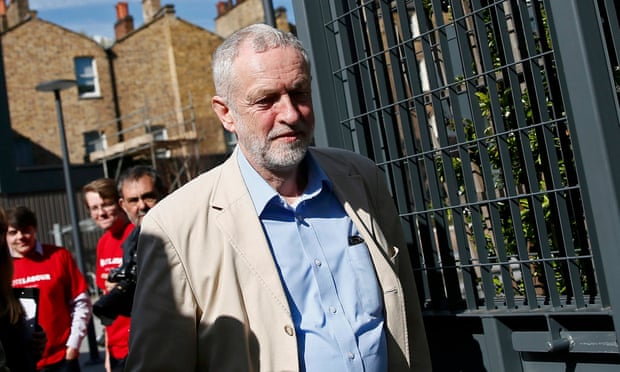
Jeremy Corbyn
 
Summary:
 
Jeremy Corbyn has told grassroots supporters that it was necessary for Labour to use social media to communicate with the public because rightwing media were censoring political debate in an unprecedented assault on the party. Speaking at the Momentum Latino launch, he said: “We have a party under attack from much of the media in this country like it has never been under attack before. How do we reach out to people? We reach out because we come together at events like this. We reach out through social media in a massive way. And so I find that social media has a very important role to play in this. [...] It is a way of reaching past the censorship of the rightwing media in this country that has so constrained political debate for so long."
 
Key data/statistical information:
 
  • "When in one week, we can get one to 2 million people watching online a message we have been able to deliver at maybe a meeting like this or perhaps one that is even bigger somewhere else"
  • Despite the analysis of a leading academic suggesting Labour could be on course for its worst results in 35 years, Corbyn said his party was “not going to lose seats; we are looking to gain seats where we can” in the elections for local councils, regional assemblies and mayoralties.
 
What's my view?
 
From a Marxist perspective, this shows that censoring still happens as the labour party complains that the rightwing media are censoring political debates. The elite people are still censoring media which shows that the audience are enjoying an illusion of autonomy because we only see the media chosen by the elites. However, from a Pluralist perspective, we can say that new and digital media has given the audience the ability to overcome this because, as shown in this situation, social media has abled the labour party to communicate with the public.

(66) Football clubs trawl social media for gaffes by transfer targets

Link: http://www.theguardian.com/media/2016/apr/16/footballers-social-media-vetting-transfers

Rio Ferdinand, who was fined £25,000 by the FA for inappropriate language in a tweet.
 
Summary:
 
Premier League football clubs now regularly vet the social media activity of prospective players for evidence of bigotry, hate speech and other illegal and offensive behaviour, following a spate of scandals. Kroll, a private investigation and cybersecurity firm, has trawled the social media accounts of potential signings for several Premier and Champions League clubs, checking their posts on Twitter, Facebook, Instagram and other platforms against a list of more than 1,000 problematic words. The revelation comes after former Sunderland and England footballer Adam Johnson was jailed for six years for grooming and sexual activity with a 15-year-old girl. Hundreds of messages from social media, messaging and chat apps – Facebook, WhatsApp and Snapchat – provided crucial evidence.

Key data/statistical information:

  • The Football Association has imposed more than £350,000 in fines on players and officials since 2011 for offences including racist and sexist comments.
  • In 2014, former Manchester United defender Rio Ferdinand was suspended for three matches while at Queens Park Rangers and fined £25,000 for directing a jibe at a Twitter follower using the word “sket”, Caribbean slang for a promiscuous woman.
  • In 2012, the former Chelsea left-back Ashley Cole was ordered to pay £90,000 – the heaviest fine for a social media infringement – after he described the FA as a #BUNCHOFTWATS on Twitter.

What's my view?

I think its good thing that it has become more strict towards the way football players act on social media because they are role models to a lot of people. As the two step flow theory suggests, the ideologies and opinions that they post will be considered by the audience who will gladly adopt their ideologies.

(65) Can the web save the press from oblivion?

Link: http://www.theguardian.com/media/2016/apr/17/can-internet-save-printed-press-blendle-lumi

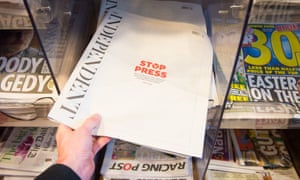
The print circulation of British newspapers has fallen steadily in recent years, claiming victims such as the Independent along the way.

Summary:

Newspapers have been battered by the internet. But the industry could be about to fight back – with help from websites that aim to be the iTunes of journalism. Last week a group of 17 American news organisations, including the New York Times and Washington Post, served a cease-and-desist legal order against a start-up news platform. The platform, called Brave, was launched in January by the creator of JavaScript, Brendan Eich. The Brave browser had been created in part in response to two recent trends in news delivery: the emergence of mobile platforms such as Apple News and Facebook’s Instant Articles, and the growing use of software that allows readers to block advertisements from news content.

Key data/statistical information:

  • About 15 years ago, when digital media became a reality, news organisations tended to adopt one of two tried-and-trusted crisis-management strategies: ostrich or lemming.
  • In America, journalist was named the fourth most endangered job in 2015, nestled between farmer and logging worker.
  • Alexander Klöpping set up Blendle in Holland in 2014. The site originally handpicked the best articles from a range of newspapers and magazines and sold them on an individual basis to those who had signed up to the site and set up an account. On this basis Blendle has established 500,000 regular users in Holland and Germany.

What's my view?

New and digital media has made the internet revolution become a big thing. People now look to the web for news instead of buying newspapers or magazines. By turning these newspapers into websites, it could potentially save the press from oblivion.